Monitors rules
Assesses compliance with fiscal limits, expenditure frameworks and public institutions' financial management.
The Czech Fiscal Council monitors fiscal rules and shows where public finances may be heading. Meet its members and explore its pay and history.
Checked as of 23 October 2026 · Independent guide, not the Fiscal Council's official website
The Fiscal Council was established under Act No. 23/2017 Coll. It is an independent expert body that does not report to a ministry. Its first members took their oath on 25 January 2018. About the Council ↗ · Start of operations ↗
Assesses compliance with fiscal limits, expenditure frameworks and public institutions' financial management.
Models public finance sustainability over 50 years, including the effects of population ageing.
Submits reports to the lower house and publishes opinions, analyses and supporting data.
Responsibilities: Fiscal Council – remit ↗. The Council does not approve the budget or impose fines. Its chair may attend government meetings in an advisory capacity. Fiscal Council powers ↗
The Fiscal Council is an independent statutory body. NERV was the government's National Economic Council, an advisory body; the government announced its abolition on 9 February 2026. This page concerns the Fiscal Council. Government statement ↗
All three are elected by the Chamber of Deputies. Terms extend beyond a government's electoral term, so a cabinet change does not automatically change the Council. The initial terms were staggered at six, four and two years. Election procedure ↗ · Members' terms ↗
All six members to date, their service and official profiles.
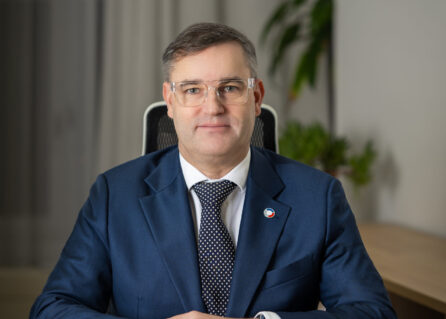
Fiscal Council chair
Economist and former Czech National Bank vice-governor. Works on macroeconomics, monetary policy and economic education.
Official profile ↗ · Term and biography ↗
Photo: Czech Fiscal Council ↗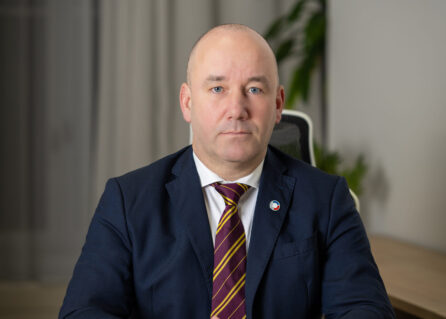
Fiscal Council member
Economist and university lecturer. Studies fiscal and monetary policy and energy economics.
Official profile ↗ · Term and biography ↗
Photo: Czech Fiscal Council ↗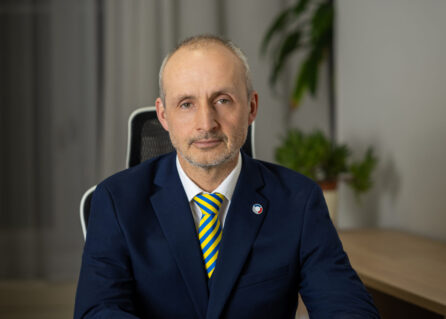
Fiscal Council member
Economics professor with extensive experience at the Czech National Bank. Specialises in exchange rates and financial integration.
Official profile ↗ · Term and biography ↗
Photo: Czech Fiscal Council ↗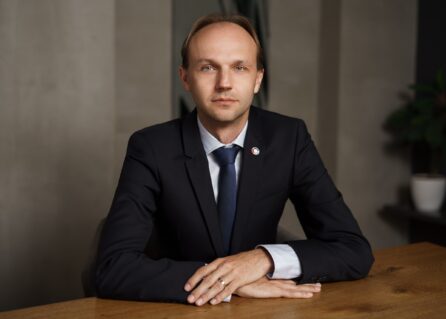
Former Fiscal Council member
Prague University of Economics and Business professor specialising in public finances, fiscal policy and public-sector efficiency.
Official profile ↗ · Term and biography ↗
Photo: Czech Fiscal Council ↗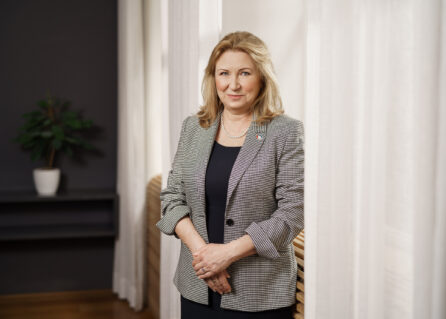
First Fiscal Council chair
Economist and former chief economist of the Czech Banking Association. Czech National Bank vice-governor since July 2022.
Official profile ↗ · Term and biography ↗
Photo: Czech Fiscal Council ↗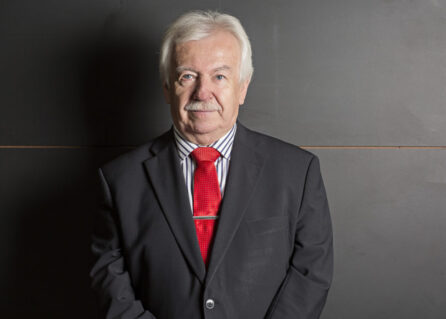
Former Fiscal Council member
Statistician, economist and former rector of the Prague University of Economics and Business. Works on economic time series and statistical methods.
Official profile ↗ · Term and biography ↗
Photo: Czech Fiscal Council ↗Photographs come from the official Fiscal Council member overview ↗; the Council also provides current portraits for media download ↗. Biographies are brief paraphrases; full profiles are available from the publisher.
Their statutory salaries and allowances are paid from the state budget. The figures below are monthly 2026 amounts stated in the Council Office budget document, not individual payslips.
gross salary
+ 35,200 CZK flat-rate allowances
gross salary
+ 26,700 CZK flat-rate allowances
Salary uses a CZK 106,433 base: a coefficient of 2.06 for the chair and 1.30 for a member. Flat-rate allowances are separate; employer contributions and any reimbursement of evidenced expenses are additional.
Draft 2026 Council Office budget, Annex 5, pp. 25–26 ↗ · Annual total statutory gross salaries for all three members: CZK 5,953,200. The document states salaries under Act No. 236/1995 Coll.
Budget chapter 359 has approved expenditure of CZK 26,202,475. It covers the Council, staff and office operations; it is not the total remuneration of three members. Budget and earlier years ↗
The timeline shows appointments and leadership changes. The table places personnel changes within cabinet periods. This does not mean the government selected every member or is responsible for their opinions.
Eva Zamrazilová, Richard Hindls and Jan Pavel take their oath.
Government at the time: Andrej Babiš I. · Event source ↗
Membership is unchanged. After an initial two-year period, he receives a six-year term.
Government at the time: Andrej Babiš II. · Event source ↗
The Council consists of chair Eva Zamrazilová and members Mojmír Hampl and Jan Pavel.
Government at the time: Petr Fiala · Event source ↗
Eva Zamrazilová moved to the central bank on 1 July. Hampl becomes chair; the Council operates with two members until a third is added.
Government at the time: Petr Fiala · Event source ↗
The Council again has three members: Mojmír Hampl, Jan Pavel and Petr Musil.
Government at the time: Petr Fiala · Event source ↗
Pavel's second term ended on 23 January. Komárek took his oath on 27 January; the other members continue.
Government at the time: Andrej Babiš III. · Event source ↗
| Government / cabinet period | Governing parties | Council membership and changes |
|---|---|---|
| Andrej Babiš I.13 Dec 2017 – 27 Jun 2018 (handover) | ANO, independents | First three-member Council from 25 Jan 2018: Eva Zamrazilová (chair), Richard Hindls, Jan Pavel. |
| Andrej Babiš II.27 Jun 2018 – 17 Dec 2021 (handover) | ANO, ČSSD | The original Zamrazilová, Hindls and Pavel line-up continues. Jan Pavel begins his second term in January 2020. Hampl is elected on 15 Dec 2021 but takes office in January 2022. |
| Petr Fiala17 Dec 2021 – 15 Dec 2025 (handover) | ODS, KDU-ČSL, TOP 09, STAN, Pirates (until Sep 2024) | Hampl joins in January 2022 and takes over as chair from Zamrazilová in July. From November 2022 the Council is Hampl, Pavel and Musil. |
| Andrej Babiš III.from 15 Dec 2025 | ANO, SPD, Motoristé sobě | Hampl, Pavel and Musil initially continue. From 27 Jan 2026 Luboš Komárek replaces Pavel: Hampl, Musil, Komárek. |
Cabinet dates: Czech government overview ↗ · Government appointment in December 2025 ↗. Hindls's first period is shown as 2018–2021 according to the Council overview. Election and oath dates may differ; we do not merge them.
The Council has published long-term projections since 2018. Alongside reports, it publishes supporting tables, opinions and public finance explainers.
Year of reaching 55% of GDP in each report's baseline scenario:
The year 2038 for the 2024 report comes from the retrospective comparison in the 2025 report. Each release uses different information and assumptions, including policies and defence spending. These are conditional scenarios; the difference cannot be attributed solely to a change of government or treated as a certain date.
Official assessment of revenue, expenditure and budgeting practices in the 2027 draft.
The Fiscal Council's baseline scenario, including the projected debt-brake crossing in 2034.
Official assessment of the draft budget against the expenditure limits then in force.
The outlook after pension system changes and with rising defence costs.
Effects of fiscal consolidation and pension system changes on long-term projections.
Structural deficits, automatic indexation and long-term budget pressures.
Long-term public finance imbalances after the pandemic and at the start of the energy crisis.
Effects of looser fiscal rules and permanent tax and spending changes.
The pandemic and the changing public finance starting point for the coming decades.
The Fiscal Council's second report on long-term government revenue and spending risks.
The Fiscal Council's first long-term projection: population ageing and public finances.
Original statistics, Fiscal Council projections and our modelled counter are different things. For this page's metadata, use Fiscal Council JSON ↗. All sources and information checked as of 23 October 2026.
Hospodářské noviny / iHNed, Seznam Zprávy, Novinky and other sources by publication year.
State debt in the news ↗Prepared by Česko na dluh · Sources and editorial standards